Adhering to Quality Assurance Standards in Website Development

In the rapidly evolving world of website development, adhering to quality assurance (QA) standards is not just a best practice, it’s a necessity. Quality assurance helps in delivering reliable, user-friendly, and secure websites that align with both client expectations and industry benchmarks. This article delves into the importance of establishing quality standards in web development, the processes and methodologies for ensuring quality, the dynamics of a QA team, and the critical role of performance and security in maintaining a high-quality website. Additionally, it discusses the significance of post-launch monitoring and the continuous improvement cycle for long-term website success.
Key Takeaways
- Quality assurance in website development ensures the delivery of high-standard, reliable, and user-centric products.
- Establishing clear and measurable quality standards is fundamental to the QA process and aligns with industry best practices.
- Incorporating QA throughout the software development lifecycle and utilizing automated tools enhances efficiency and accuracy.
- A dedicated QA team with clearly defined roles and a culture of continuous improvement is crucial for maintaining quality.
- Post-launch monitoring and user feedback are essential for ongoing website optimization and maintaining customer satisfaction.
Establishing Quality Standards in Web Development
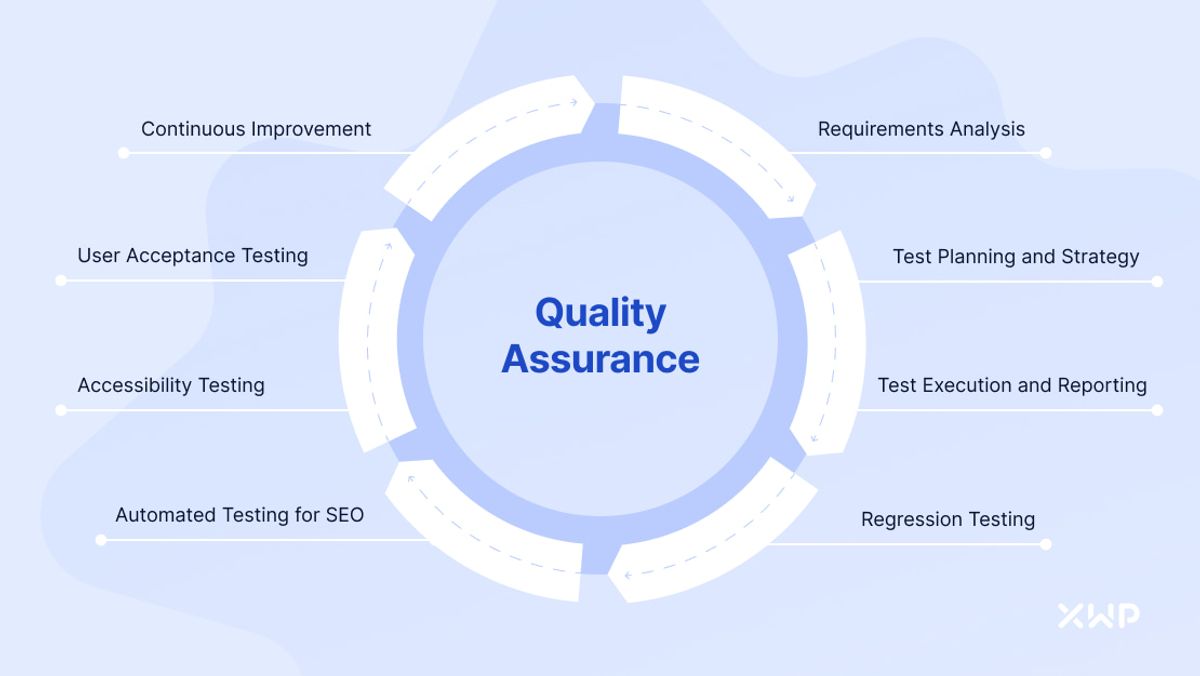
Defining Acceptable Quality Criteria
In the realm of website development, establishing clear quality standards is the foundation of a robust quality assurance (QA) framework. These standards serve as benchmarks that the final product must meet to be deemed of acceptable quality. For instance, a web development team might specify criteria such as maximum allowable load times, responsiveness thresholds, and a ceiling for the number of permissible bugs.
To ensure these standards are effective, they must be SMART: Specific, Measurable, Attainable, Relevant, and Timely. This approach not only aligns with customer expectations but also adheres to industry best practices and regulatory requirements. A table illustrating sample quality criteria for a website could look like this:
| Quality Aspect | Standard |
|---|---|
| Load Time | <= 3 seconds |
| Responsiveness | 90%+ on Lighthouse |
| Bug Threshold | < 10 critical bugs |
By integrating customer feedback and reviewing regulatory standards, the quality criteria established will guide the development process towards delivering a product that resonates with users and stands up to industry scrutiny.
Quality standards may vary depending on the nature of the website and its intended audience. However, the ultimate goal remains the same: to deliver a product that ensures compliance, security, and user satisfaction. Adhering to these standards through structured QA processes fosters collaboration and results in a top-quality product.
Aligning with Industry Regulations and Best Practices
In the dynamic field of website development, aligning with industry regulations and best practices is not just a recommendation—it’s a necessity. Adherence to these standards is essential for delivering high-quality, reliable, and secure websites. It ensures that the end product meets not only client expectations but also complies with legal and technical requirements.
To achieve this alignment, developers must stay informed about the latest trends and updates in web development standards. For example, the Techopedia article on ‘Website Development Best Practices & Trends for 2024’ highlights the importance of a User-Centric Approach, Mobile Responsiveness, and Performance Optimization among others.
By incorporating best practices into the development process, teams can significantly reduce post-launch issues and enhance user satisfaction.
Furthermore, it’s crucial to establish a process for regularly updating skills and knowledge to keep pace with the evolving digital landscape. This includes participating in industry forums, attending webinars, and subscribing to relevant publications for continuous learning.
Setting Measurable Quality Metrics
To ensure that a website meets the highest standards of quality, it is essential to establish measurable quality metrics. These metrics serve as benchmarks for assessing the performance and reliability of the website throughout its development lifecycle. For instance, one might consider metrics such as load time, error rate, and adherence to coding standards.
Metrics should be SMART: Specific, Measurable, Attainable, Relevant, and Timely. Here’s an example of how these metrics can be structured:
| Metric | Goal | Measurement Method |
|---|---|---|
| Load Time | <= 2 seconds | Performance Testing |
| Error Rate | < 1% | Automated Testing |
| Coding Standards | 100% Adherence | Code Review |
By setting clear and quantifiable goals, teams can objectively evaluate progress and identify areas for improvement. This approach not only enhances the quality of the website but also boosts customer satisfaction and trust.
It is also important to align these metrics with the overall business objectives and user expectations. Regular reviews and updates to the metrics ensure they remain relevant and drive continuous improvement. In the context of web development, companies like AM2 Studio integrate these practices to deliver digital experiences that not only meet but exceed customer expectations.
Quality Assurance Processes and Methodologies

Incorporating QA in the Software Development Lifecycle
Incorporating Quality Assurance (QA) into the software development lifecycle is a strategic approach that ensures software products meet the required quality standards before they are released. QA activities should be embedded early in the development process, from requirement analysis to test planning and execution, fostering a proactive culture of quality.
By integrating QA practices throughout the development lifecycle, teams can identify and resolve issues more efficiently, leading to a more reliable and user-satisfactory product.
QA is not just a phase but an ongoing commitment that spans the entirety of the product lifecycle. It involves a series of steps that include establishing quality standards, defining processes, conducting audits, and ensuring compliance with standards and best practices. This systematic approach helps in ascertaining the reliability, functionality, and overall user satisfaction of the final product.
The table below outlines key QA activities and their integration points within the software development lifecycle:
| Development Phase | QA Activities |
|---|---|
| Requirement Analysis | Define quality criteria |
| Design | Align with best practices |
| Implementation | Continuous code reviews |
| Testing | Execute test plans |
| Deployment | Monitor performance |
| Maintenance | Regular health checks |
Continuous improvement is an essential aspect of QA, requiring teams to regularly update their skills and processes to align with evolving industry standards and technologies. This ensures that the quality of the product remains high and that the development process is both efficient and effective.
Utilizing Automated Testing Tools
In the realm of web development, automated testing tools are indispensable for ensuring consistent quality and reliability. These tools allow developers to execute a suite of tests unattended across various data sets, environments, and platforms, which is crucial for identifying defects early and streamlining the QA process.
Automated testing is not just about running tests; it’s about maintaining the quality of the test scripts and adapting them to changes in the application. A thoughtful approach to test case selection and regular updates to test scripts are necessary to keep the automation effective and relevant.
Choosing the right test cases for automation is key—focus on repetitive, time-consuming, and critical scenarios. Here’s a quick checklist to guide the selection:
- Repetitive tests that run for multiple builds
- Tests that require multiple data sets
- High-risk areas prone to errors
- Tests that are time-consuming when done manually
By integrating QA into the development lifecycle with activities such as reviews, testing, and monitoring, teams can proactively tackle defects. This shift-left approach, where testing starts earlier in the development process, is complemented by thorough code reviews and robust testing methodologies.
Documenting Standard Operating Procedures
Documenting Standard Operating Procedures (SOPs) is a critical component of maintaining quality assurance in website development. These documents serve as a reference point for the team, ensuring that everyone understands the processes and follows them consistently. SOPs should be easily accessible and regularly updated to reflect any changes in tools, technologies, or methodologies.
Effective SOPs are not just about compliance; they are about creating a framework for efficiency and repeatability. They help in minimizing errors and streamlining workflows. For instance, a well-documented SOP for code reviews can ensure that all code is inspected according to the same standards, reducing the likelihood of bugs making it to production.
By establishing clear SOPs, organizations can foster a culture of accountability and continuous improvement. It’s not just about having the procedures in place; it’s about ensuring they are actively used and contribute to the overall quality of the project.
To implement effective SOPs, consider the following steps:
- Identify key processes that need standardization.
- Draft the procedures with input from all stakeholders.
- Review and test the SOPs to ensure they are practical and clear.
- Train the team on the SOPs and ensure understanding.
- Monitor the use of SOPs and gather feedback for improvements.
- Update the SOPs regularly to incorporate new best practices and feedback.
Remember, the goal of SOPs is to provide clarity and consistency across all stages of the development process, from design to deployment.
Quality Assurance Team Dynamics

Assigning Roles and Responsibilities
In the realm of website development, clear roles and responsibilities are pivotal for the success of quality assurance (QA) processes. A well-defined structure ensures that each team member understands their tasks and how they contribute to the overall quality of the project. For instance, a network test engineer‘s main responsibility is to evaluate products, develop test plans, and integrate skills and resources that best align with the project’s needs.
The QA team’s roles can be broadly categorized as follows:
- Checkers: Individuals who review work to confirm adherence to standards.
- Test Engineers: Professionals who develop and execute test plans.
- QA Specialists: Senior team members who dig deep to remove any bugs and ensure the highest quality standards.
By assigning specific roles, such as checkers and test engineers, and fostering collaboration within the team, the QA process becomes more efficient and effective.
It is also essential to establish a comprehensive QA plan that includes regular audits and performance reviews to maintain a high standard of work. This approach not only optimizes website performance but also enhances the overall quality.
Fostering a Quality-Driven Culture
A quality-driven culture is pivotal for the success of any web development project. Integrating quality management practices into the development process is not just about adhering to standards; it’s about creating a mindset where quality is the foundation of every task. By establishing a comprehensive Software Quality Assurance (SQA) plan and fostering team collaboration, we set the stage for excellence and customer satisfaction.
Encouraging all employees to prioritize quality in their work leads to a more engaged and motivated team. Recognizing and rewarding high-quality results can be a powerful incentive for continuous improvement.
Training and equipping QA teams is crucial for maintaining high-quality websites. A culture that values learning and growth ensures that the team is always up-to-date with the latest industry practices, which in turn enhances the user experience. Below is a list of actions that can help in fostering a quality-driven culture:
- Recognize and celebrate achievements related to quality.
- Provide incentives for consistent delivery of high-quality work.
- Establish clear goals and pathways for quality improvement.
- Embed QA principles as intrinsic to all tasks.
- Promote ownership and pride in work among team members.
Continuous Learning and Improvement
In the ever-evolving landscape of website development, continuous learning and improvement are pivotal to maintaining and enhancing quality assurance (QA) standards. By fostering a culture that values ongoing education and skill enhancement, QA teams can stay abreast of the latest technologies and methodologies. This proactive approach not only keeps the team competent but also drives innovation within the organization.
Continuous improvement and adaptation in website development is crucial for staying competitive. Integrating QA teams early reduces costs and ensures quality throughout the development lifecycle.
To ensure a systematic approach to continuous learning, the following steps can be implemented:
- Regularly review and update quality standards to reflect current industry trends.
- Encourage the QA team to participate in workshops, webinars, and conferences.
- Allocate time for team members to research and share insights on emerging QA tools and practices.
- Implement a feedback loop where team members can suggest improvements to QA processes.
These initiatives not only enhance the team’s capabilities but also contribute to a more robust and reliable development process, ultimately leading to higher customer satisfaction and better end products.
Ensuring Website Performance and Security

Conducting Regular Website Health Audits
Regular website health audits are crucial for maintaining the integrity and performance of a website. Conducting these audits periodically ensures that any potential issues are identified and addressed promptly. A comprehensive audit typically includes checking for broken links, outdated content, security vulnerabilities, and performance bottlenecks.
By systematically reviewing and updating your website, you can prevent the accumulation of issues that could lead to a poor user experience or even compromise the site’s security.
To effectively manage these audits, consider the following steps:
- Assign a dedicated team or hire external auditors to conduct the audits.
- Schedule regular audits at intervals that suit your website’s needs, such as bi-monthly or quarterly.
- Celebrate QA successes to motivate the team and foster a culture of continuous improvement.
Additionally, implementing tools for automated monitoring can provide real-time insights and alerts, allowing for swift responses to any detected anomalies.
Optimizing for Speed and User Experience
In the realm of website development, optimizing for speed and user experience is paramount. A swift and responsive website not only retains users but also contributes to higher search engine rankings. To achieve this, developers must focus on several performance optimization techniques.
- Image Compression: Large images can slow down page loading times. Employing image compression without sacrificing quality is essential.
- Caching: Implementing caching mechanisms can drastically reduce load times by storing frequently accessed data.
- Script Minification: Minimizing the size of CSS and JavaScript files through minification reduces the number of HTTP requests, speeding up the website.
- External Scripts: Limiting the use of external scripts can prevent delays caused by third-party resources.
By adhering to these strategies, developers can significantly enhance the speed and usability of a website, leading to improved user satisfaction and engagement.
It’s also crucial to regularly update and maintain the website to prevent security vulnerabilities and ensure optimal performance. A well-maintained website reflects a commitment to quality and fosters trust with its users.
Implementing Robust Security Measures
Ensuring the security of a website is paramount in maintaining the trust of users and protecting sensitive data. Implementing robust access controls is a critical step in preventing unauthorized access and reducing the likelihood of security breaches. Access controls should be complemented by regular security audits and updates to security protocols to address emerging threats.
To maintain a secure website, it is essential to establish a comprehensive security strategy that includes both preventive measures and responsive plans in case of an incident.
A multi-layered security approach often includes the following elements:
- Regular updates to software and plugins to patch vulnerabilities
- Strong password policies and two-factor authentication for user accounts
- Daily automated security checks to ensure the site is malware-free
- Frequent backups to enable quick recovery in case of data loss
By diligently applying these practices, website owners can significantly mitigate risks and ensure a secure online environment for their users.
Post-Launch Quality Assurance and Monitoring

Setting Up Post-Launch Monitoring Systems
After a website launch, it’s crucial to have a robust post-launch monitoring system in place to ensure the site remains healthy and performs optimally. This involves setting up tools and processes that continuously check the website’s uptime, security, and performance metrics.
- Uptime monitoring is essential to ensure that your website is always accessible to users. Automated email alerts can notify the team immediately if the site goes down, allowing for quick resolution.
- Regular security checks help in keeping the site free from malware and other vulnerabilities. This is particularly important as new threats emerge constantly.
- Performance checks should be conducted to guarantee that the site loads quickly, providing a good user experience and aiding in SEO rankings.
- SEO monitoring tracks how well your site ranks for important keywords and highlights potential areas for improvement.
- Implementing automated backups safeguards your data, allowing for quick restoration in case of any issues.
By proactively monitoring these aspects, you can address issues promptly, maintain a high level of user satisfaction, and ensure that your website continues to meet its performance goals.
It’s also beneficial to review and update your monitoring tools regularly to adapt to new technologies and threats. Remember, a successful website is not just about a smooth launch, but also about sustained quality and performance over time.
Responding to and Resolving Post-Launch Issues
Once a website is launched, the journey towards maintaining its quality is far from over. Quick and effective response to post-launch issues is crucial to uphold the website’s integrity and user satisfaction. The process typically involves several steps:
- Identify and classify issues: Leveraging user feedback and monitoring tools to detect any problems.
- Prioritize based on impact: Focusing on issues that significantly affect user experience or functionality.
- Collaborate for solutions: Working with developers, designers, and other stakeholders to devise and implement fixes.
- Verify and monitor: Ensuring that the solutions are effective and monitoring for any recurrence or new issues.
It’s essential to have a structured approach to issue resolution to minimize the impact on users and maintain a positive brand image.
By adhering to a clear set of procedures, teams can efficiently manage and resolve issues, often turning potential negatives into opportunities for improvement. This hinges upon the availability of easily digestible processes and rules that clearly describe objections and expectations in the day-to-day language of the organization. After all, from undervaluing teams to neglecting post-launch plans, it’s important to learn which mistakes to avoid for a successful strategy.
Gathering User Feedback for Continuous Improvement
In the realm of web development, continuous improvement is a cornerstone of success. Gathering user feedback is an indispensable part of this process, providing actionable insights that can shape the evolution of a website. By implementing a structured approach to collect and analyze feedback, businesses can pinpoint areas for enhancement and ensure that their website aligns with user expectations and needs.
User feedback is a goldmine of information that, when leveraged correctly, can lead to significant improvements in website functionality and user satisfaction.
A variety of methods can be employed to gather this valuable feedback, including surveys, feedback forms, and usability tests. Below is a list of effective strategies:
- Utilizing customer feedback form templates
- Conducting user testing sessions
- Analyzing website usage data for patterns
- Encouraging users to report issues and suggestions
Each strategy offers a unique perspective on user experience and can contribute to a comprehensive understanding of how the website is performing. It’s crucial to not only collect this feedback but also to act on it promptly, ensuring that the website remains a dynamic and user-centric platform.
Ensuring the success of your digital platform doesn’t end at launch. At [Your Company], we specialize in post-launch quality assurance and monitoring to keep your website performing at its best. Our dedicated team provides ongoing support, maintenance, and performance optimization to ensure your site remains healthy and efficient. Don’t leave your website’s success to chance—visit our [Services] page to learn how we can help maintain and enhance your online presence.
Conclusion
In the fast-paced world of website development, adhering to quality assurance standards is not just a formality—it’s a necessity for success. Throughout this article, we’ve explored the multifaceted approach to ensuring quality, from establishing clear standards and metrics to embedding QA principles into the team’s ethos. By implementing effective QA processes, businesses can deliver top-quality products that impress users and build brand loyalty. Moreover, post-launch monitoring and continuous improvement are essential to maintain optimal website performance and security. As we’ve seen through various case studies, a commitment to quality assurance helps in delivering seamless, enjoyable experiences that meet and exceed customer expectations. Remember, quality assurance is an ongoing journey that, when embraced fully, leads to the creation of exceptional digital products that stand the test of time and technology.
Frequently Asked Questions
What are quality assurance standards in website development?
Quality assurance (QA) standards in website development are a set of criteria and guidelines that ensure a website is developed to meet specific quality benchmarks. These standards cover aspects such as functionality, performance, security, and user experience to ensure the website is reliable, secure, and provides a positive user experience.
How is QA integrated into the software development lifecycle?
QA is integrated into the software development lifecycle through continuous testing, review, and feedback at each stage of development. This includes planning, design, coding, and deployment. Automated testing tools and standard operating procedures are often used to maintain consistency and efficiency in the QA process.
Why is website performance optimization important?
Website performance optimization is important because it directly affects user experience, engagement, and conversion rates. A fast-loading website can improve search engine rankings, reduce bounce rates, and enhance customer satisfaction, leading to increased sales and brand loyalty.
What are the benefits of conducting a website health audit?
Conducting a website health audit helps identify areas for improvement in SEO, performance, security, and usability. It provides a comprehensive analysis of the website’s current state, allowing developers to make informed decisions to enhance the site’s overall effectiveness and user experience.
How does post-launch monitoring contribute to website quality?
Post-launch monitoring is crucial for quickly identifying and resolving new bugs or issues that may arise after a website goes live. It ensures the website continues to function as intended and allows for ongoing improvements based on real user feedback and performance data.
What role does a QA team play in fostering a quality-driven culture?
A QA team promotes a quality-driven culture by setting high standards, enforcing best practices, and encouraging continuous learning and improvement. They lead by example and collaborate with other team members to integrate quality assurance into every aspect of the development process.